

Key takeaways
- A Blue Cruise is a 3–7 day trip on a traditional wooden gulet, anchoring in a different bay every night.
- The classic short route runs from Fethiye to Olympos via Butterfly Valley, Kaş and the sunken city of Kekova.
- June and September are the sweet spot: warm water, calm bays and fewer boats.
- The crew sails and cooks; you swim, read, explore ruins and eat very well.
- Pack soft luggage, swimwear, reef-safe sunscreen and some cash for the bar tab.
A Blue Cruise is the most relaxed way to see Turkey’s turquoise coast: three to seven days on a traditional wooden gulet, swimming off the boat every morning and anchoring in a different bay every night. On the popular four-day route from Fethiye to Olympos you’ll pass Butterfly Valley, the harbour town of Kaş and the sunken city of Kekova — places that roads barely reach.
What exactly is a gulet?
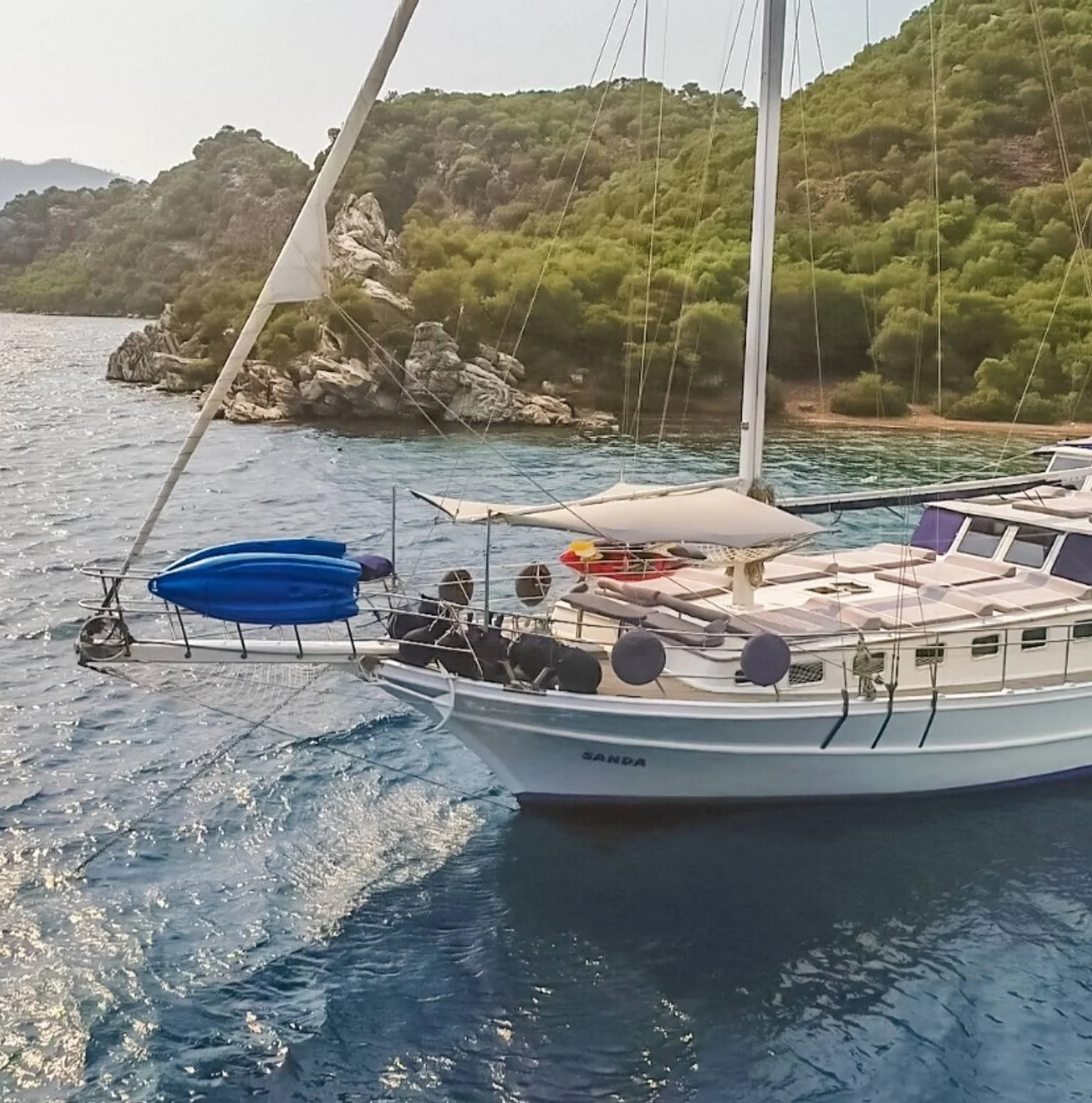
A gulet is a broad, two-masted wooden boat built on the Aegean and Mediterranean coast of Turkey, originally for fishing and trade. Today’s gulets are built for comfort rather than speed: a big shaded deck with cushions, a long dining table, eight to twelve compact cabins with small bathrooms, and a crew of three or four — captain, cook and deckhands.
The name “Blue Cruise” (Mavi Yolculuk in Turkish) goes back to writers and artists who sailed this coast in the 1950s and 60s. The spirit hasn’t changed: slow days, simple pleasures, the sea as your swimming pool.
Which route should I choose?
For a first cruise, the Fethiye–Olympos route is hard to beat because it packs the most variety into a few days. A typical four-day itinerary looks like this:
- Day 1: Board in Fethiye, swim at Gemiler Island with its Byzantine church ruins.
- Day 2: Butterfly Valley — a deep gorge ending in a beach — then on towards Kalkan or Kaş.
- Day 3: Kekova, where you glide over the walls of a sunken Lycian town, and the castle village of Simena.
- Day 4: Disembark near Demre and transfer to Olympos, famous for its ruins in the forest and the eternal flames of the Chimaera.
Longer cruises add the Gulf of Göcek’s pine-fringed bays or continue towards the Bodrum peninsula. The captain may change the order of stops with the wind; that flexibility is part of the charm.
When is the best time for a Blue Cruise?
The season runs from about May to October. Our honest advice: aim for June or September. The sea is warm (around 24–27 °C), the meltemi wind is gentler, and the most popular bays are far quieter than in July and August, when temperatures on land often climb above 35 °C. May and October are lovely too, with cooler evenings — bring a light jacket.
What is life on board really like?
Days fall into an easy rhythm. Breakfast on deck, a swim before the engine starts, a few hours of cruising with a book in the shade, lunch at anchor and another swim, then an afternoon stop to explore a village or ruin. Dinner is served on deck as the sun goes down. Some guests sleep on the deck cushions under the stars on hot nights.
The cook is the unsung hero of every gulet. Expect breakfast spreads of olives, cheese, tomatoes, eggs and honey; lunches of mezze and salads; and grilled fish or chicken for dinner. Vegetarians are well looked after — tell the operator in advance.
How comfortable are the cabins?
Cabins are compact but clean, usually with a double bed or two singles, air conditioning that runs when the generator is on, and a tiny private bathroom. Think of the cabin as a place to sleep and change; the deck is where you live. If space matters to you, ask about the cabin layout before booking.
What should I pack?
- A soft bag rather than a hard suitcase — it has to fit under a bed.
- Two swimsuits, a cover-up and a light long-sleeved shirt for the sun.
- Reef-safe sunscreen, a hat and sunglasses.
- Water shoes for rocky beaches and a small dry bag for shore visits.
- Cash (Turkish lira or euros) for the bar tab, tips and harbour towns.
Is a gulet cruise good value?
A shared-cabin cruise usually includes your berth, meals and the services of the crew, which makes it surprisingly good value compared with hotel nights plus restaurants and day-boat trips on the same coast. Budget extra for drinks, entrance fees at sites like Kekova or Olympos and a tip for the crew at the end — a good crew earns it.
If this sounds like your kind of holiday, a short cruise is the perfect way to finish a trip that started in Istanbul or Cappadocia. Your body will thank you after all those early starts at the ruins.
Frequently asked questions
Is a gulet cruise suitable if I have never sailed?
Yes. The captain and crew handle all sailing and navigation. Guests swim, relax and join shore visits; no experience is needed.
Do I get seasick on a gulet?
Most nights are spent at anchor in sheltered bays and the route hugs the coast, so the sea is usually calm. Take motion-sickness tablets if you are sensitive and stay on deck looking at the horizon.
Are drinks included on a Blue Cruise?
Meals are usually included; drinks are normally paid on a bar tab at the end of the cruise. Check the What's included section of your tour.
Can families with children join a gulet cruise?
Many gulet tours accept children from around eight years old. Check the minimum age on the tour page, and remember that cabins are compact.